7 Simple Tips I Learned to Keep My Fresh Flowers Alive Longer
Recently, arranging fresh flowers has slowly become a small routine I look forward to. I pick up a bunch from the grocery store or the market, bring it home, trim the stems, and place it in a vase somewhere around the house.
It feels like such a simple way to brighten any space. But very quickly, I ran into a frustrating problem. By the second or third day, the flowers began drooping, the petals softened, and the bright energy disappeared.
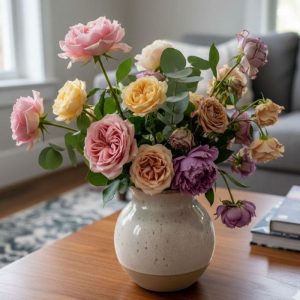
At first, I blamed the flowers themselves and assumed they were old. After losing several bunches too soon, I realized I needed to understand what they actually needed.
That night, after cleaning up another wilted arrangement, I sat on the couch and started looking for answers. I watched several YouTube videos, read a few posts from florists, and even listened to gardeners explain common mistakes.
Once I applied the new tips, everything changed. My flowers began lasting almost a week — sometimes even longer. Here are the details that truly helped me.
Tip 1: Change the Water Frequently and Treat It Like the Flower’s Food and Air
One of the biggest mistakes I used to make was letting the water sit too long. I thought flowers only needed water, but I didn’t realize how quickly bacteria builds inside a vase.
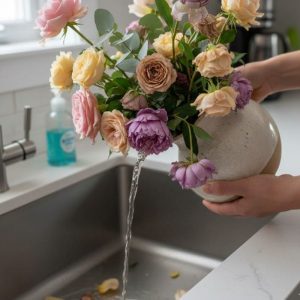
The water becomes dirty far faster than we expect. Now I change the water every one to two days.
When I pour out the old water, I always rinse the vase with warm water, use my fingers or a small sponge to clean the inside walls and make sure no slimy film is left at the bottom.
Flowers drink water so quickly that they easily clog their stems with bacteria if the water becomes cloudy. So keeping the vase clean creates a healthy environment for them to drink easily and stay firm.
Tip 2: Cut the Stems at a 45-Degree Angle (and Trim a Little Every Time)
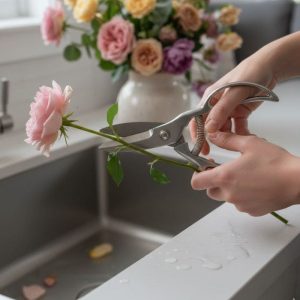
Before learning this, I trimmed stems straight across with scissors, which actually restricts how much water they can absorb. A florist on YouTube explained that a slanted cut opens the stem wider, helping it drink more water at once.
Now I use a sharp knife or garden shears to cut each stem at a 45-degree angle, take off at least half an inch and re-cut every time I change the water
If a stem sits flat on the bottom of the vase, it gets blocked and doesn’t drink well. The angled cut prevents this by allowing water to flow more easily.
What surprised me most was how quickly flowers perk up after a fresh cut. Some stems that looked tired suddenly became firm again within an hour.
Tip 3: Remove All Leaves That Sit Below the Water Line
Leaves inside the water begin breaking down in less than a day. This decay creates bacteria, and bacteria spreads through the entire vase, making the flowers wilt far faster than they should.
Now, before arranging anything, I run my fingers along the stems, strip off every leaf that would sit in water and keep only the leaves near the top for decoration.
This keeps the water cleaner and prevents that cloudy look that used to show up on day two.
Tip 4: Add a Simple Mixture to the Water That Helps Flowers Drink Better
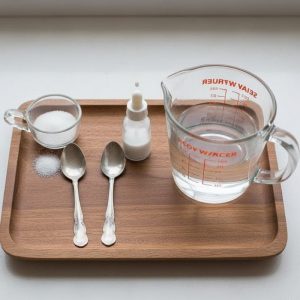
I used to think flower additives were unnecessary. But after trying a small mixture recommended in several videos, I saw how effective it was.
Here’s what works best for me:
- 1 teaspoon sugar
- 1 teaspoon white vinegar
- 1-2 tiny drops of bleach
- 2 cups of fresh water
In this mixture, the sugar gives the stems a bit of extra energy. The vinegar increases acidity, helping water travel through the stems more easily. And the bleach prevents bacteria from spreading.
Tips: Do not use too much bleach, just a couple drops. When I used any more than that, the smell became too strong and the flowers didn’t last as long.
Tip 5: Keep Flowers Away from Direct Sunlight, Heat, and Fruit Bowls
I used to place flowers near the window because I assumed sunlight would help them stay alive. I learned that flowers, once cut, prefer cooler, shaded areas. Direct heat dries them quickly and breaks down the petals.
Now I place my arrangements in spots with natural light, but not strong sun; good air circulation and no heating vents or appliances nearby.
Another surprising discovery is how much fruit affects flowers. Fruit releases ethylene gas, which speeds up aging in both fruit and flowers.
When I kept flowers on the same counter as apples or bananas, they wilted twice as fast. Now I make sure my fruit bowl is far away from any arrangements.
Tip 6: Clean the Vase Thoroughly Before Starting a New Arrangement
Even after washing the vase quickly, there are tiny bacteria spots that cling to the inside. A florist demonstrated this using a clear vase, and it was shocking how much residue stays behind.
So if you are going to arrange flowers, take a few extra minutes to wash the vase with warm water and dish soap, scrub the bottom corners then dry it completely before filling it again.
Tip 7: Give the Bouquet a Small Refresh Every Few Days
Every two or three days, I take a moment to examine the flowers closely. I gently shake off loose petals, remove any wilted stems, and re-trim the healthy ones. This small refresh makes the whole arrangement feel new again.
I also adjust the shape of the bouquet. Sometimes I move a few stems around or shift the height of certain flowers. This keeps the arrangement looking alive and full even as some flowers naturally age.